
1850 SMC - Spywagon
GLOBAL UTILITY AIRCRAFT FOR SPECIAL MISSIONS
Jet-A / JP-8 compatible. Short-field capable. Configurable for ISR, logistics, and medevac.
- max range 1,400NM / 9 HOURS - Cruise spEED 160 kias - MAX USEFUL LOAD 2,000 lbs -
- max range 1,400NM / 9 HOURS - Cruise spEED 160 kias - MAX USEFUL LOAD 2,000 lbs -
- max range 1,400NM / 9 HOURS - Cruise spEED 160 kias - MAX USEFUL LOAD 2,000 lbs -
- max range 1,400NM / 9 HOURS - Cruise spEED 160 kias - MAX USEFUL LOAD 2,000 lbs -
- max range 1,400NM / 9 HOURS - Cruise spEED 160 kias - MAX USEFUL LOAD 2,000 lbs -
- max range 1,400NM / 9 HOURS - Cruise spEED 160 kias - MAX USEFUL LOAD 2,000 lbs -
- max range 1,400NM / 9 HOURS - Cruise spEED 160 kias - MAX USEFUL LOAD 2,000 lbs -
- max range 1,400NM / 9 HOURS - Cruise spEED 160 kias - MAX USEFUL LOAD 2,000 lbs -
TAILORED CONFIGURATIONS FOR LAW ENFORCEMENT, MILITARY, AND EMERGENCY MISSIONS
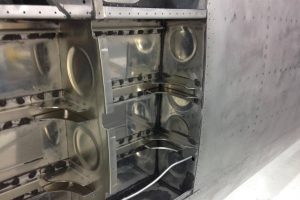
Integrated camera port, mission payload architecture, Jet-A / JP-8 compatibility, and austere-environment capability from a single baseline platform.
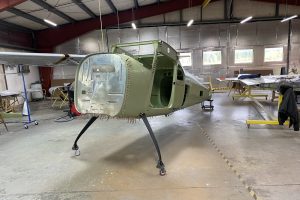
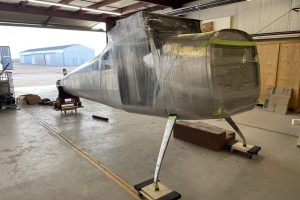
- ISR / surveillance
- Border security
- Maritime patrol
- SAR
- Medevac
- Logistics
- Glider Towing
- Humanitarian response
- Mission support
- One aircraft, multiple mission sets
- Configured through mission equipment, not airframe change
- Built for access, payload, and repeatable deployment
- Operates from short, unimproved, and infrastructure-limited environments
- Jet-A / JP-8 aligned
- Supports wheel, float, and ski operations
- ISR / surveillance
- Border security
- Maritime patrol
- SAR
- Medevac
- Logistics
- Glider Towing
- Humanitarian response
- Mission support
- One aircraft, multiple mission sets
- Configured through mission equipment, not airframe change
- Built for access, payload, and repeatable deployment
- Operates from short, unimproved, and infrastructure-limited environments
- Jet-A / JP-8 aligned
- Supports wheel, float, and ski operations
- Crewed to remote-assisted to optionally piloted
- Same aircraft, expanding control authority
- No separate unmanned airframe required
- No fleet split by mission type
- Autonomy added as a control layer
- Mission systems integrated into the baseline platform
- Common training, maintenance, and spares architecture retained
- Common airframe retained across crewed and remote-enabled use
- Reduces crew exposure in high-risk environments
- Extends utility across ISR, patrol, relay, and logistics missions
- Preserves one standardized platform while expanding mission envelope
- Built for the transition path already underway in defense aviation
- Supports future remote and autonomous integration without breaking baseline commonality
- 350 hp DeltaHawk Liquid Cooled Engine
- 3,000 Hour TBO
- 707 ft-lb torque
- 140 gallons onboard
- 20.0 / 14.6 / 10.9 GPH
- Jet-A / JP-8 / SAF / #2 diesel
- No 100LL dependency
- Built for:
- range
- loiter
- fuel access
- repeatable sortie generation
- Better fit for:
- distributed operations
- remote deployment
- austere basing
- cross-border mission use
- $150/hour direct operating cost
- 3,000-hour TBO/ AOG engines available
- Unlimited cycles on condition
- up to 9 hours aloft with standard fuel tanks
- Sea level to >25,000 ft ceiling
- Built for persistence
- Built for utilization
- Built for repeatable mission output
- Built to avoid turbine economics & downtime.
- 22-inch camera port for EO/IR, ISR, and mapping payloads
- Standardized payload architecture for repeatable sensor and mission-system integration
- Internal volume for operators, avionics, comms, medical equipment, cargo, or mission kits
- External hardpoint capacity for stores, sensors, pods, relay packages, and other mission equipment
- Payload release capability for controlled deployment of approved mission stores or expendable systems
- Airborne relay capability for communications extension, network support, and distributed operations
- Configured through mission systems, not a different airframe
- One baseline platform across surveillance, relay, logistics, medical, and utility missions
- Short-field capable
- Built for unimproved strips
- Built for forward locations
- Built for low-infrastructure environments
- Supports:
- dispersed basing
- expeditionary access
- remote logistics
- forward surveillance
- humanitarian response
- Wheels, tricycle gear, floats, skis, and wheel-skis
- One airframe across land, water, snow, and mixed-access environments
- Expands usable operating surface, not just runway options
- More access
- Less dependence on developed airports
- Less dependence on fixed support infrastructure
- Better fit for remote, border, maritime, and austere mission sets
- This aligns with current distributed-operations doctrine. Air Force ACE doctrine centers on operations from distributed locations that are defensible, sustainable, and relocatable, and USAF reporting describes ACE as shifting airpower generation from large, centralized bases to smaller, dispersed locations.
- Air Force mobility doctrine also states that some airland missions can be conducted at austere airfields with minimal ground support and security, which directly supports the value of a light utility platform that can operate without large-base infrastructure.
- One baseline platform across training, utility, and mission use
- Same aircraft can support tailwheel or tricycle-gear operations
- Reduces the need for separate training and mission fleets
- Preserves commonality across pilots, maintainers, parts, and procedures
- Jet-A / JP-8 aligned
- Operable from bases and forward locations already built around kerosene fuels
- Better fit for military, government, and remote commercial operators
- Less dependence on avgas-specific support infrastructure
- ~$150 USD per hour operating cost
- Better suited for high-frequency training and companion-aircraft use
- Lower cost to keep current
- Lower cost to generate hours, repetitions, and proficiency
- Supports:
- pilot training
- mission rehearsal
- utility transport
- proficiency flying
- companion-aircraft roles
- distributed fleet operations
- One airframe
- One sustainment path
- One fuel logic
- Lower operating burden
- Civil, government, and defense relevant
- One airframe across utility and mission support roles
- Jet-A / JP-8 aligned
- ~$150/hour
- Tailwheel, tricycle, float, and ski capable
- More access
- More utilization
- Less fleet fragmentation
- Lower operating burden
The Bushliner 1850 is a new-production, low-cost, JP-8-compatible, optionally piloted, multi-mission, high-cycle utility aircraft built for distributed operations, austere access, and repeatable mission output.
It is the industrial restart of a proven aircraft class.
The U-17 proved the requirement decades ago: a light utility aircraft able to operate from short and unimproved strips, carry meaningful payload, and remain useful in remote, infrastructure-limited environments. That requirement did not disappear. The fleet aged out. The mission expanded.
The Bushliner 1850 restores that class for the current environment.
One baseline airframe.
One sustainment path.
One fuel logic.
One platform across ISR, logistics, medevac, patrol, communications relay, mission support, and training.
It is more economical at low altitude than turbine aircraft, where many real-world surveillance, patrol, logistics, and utility missions are actually flown. It is built for high-cycle use, unlimited-cycle diesel operation, and repeatable sortie generation without pushing operators into turbine acquisition and operating cost. It sits between small drones and larger mission-specific aircraft: more payload, endurance, access, and utility than unmanned systems alone, and far lower cost and complexity than larger fixed-wing platforms built for narrower roles.
The aircraft is structured as a stable host for mission systems and payloads rather than a single-purpose configuration. It is designed to accept surveillance systems, relay systems, medical payloads, cargo, external stores, release-capable payload architecture, and future autonomous or remote-assist systems without requiring a different aircraft for each role.
That also makes it useful as a training and companion-aircraft platform. The same aircraft can support mission execution and generate lower-cost training hours for operators who would otherwise burn time, fuel, and maintenance life in larger and more expensive aircraft. More repetitions. More proficiency. Lower cost per hour. Lower cost per mission.
Configured through mission systems, not airframe redesign.
Compatible with kerosene-fuel logistics.
Structured for future optionally piloted operation without creating a separate aircraft category.
Built to operate from established bases, forward locations, and low-infrastructure environments where larger aircraft are inefficient and turbine economics are excessive.
This is not nostalgia. It is a modern utility aircraft built for access, persistence, payload flexibility, and high-cycle operational relevance.
My opinion: this is much closer. It adds the missing bridge logic, trainer logic, low-altitude turbine comparison, and high-cycle economics without turning into a spec dump.